


Ayan ConsultingMeydan Grandstant, 6th Floor,
Meydan Road, Nad Al Sheba, Dubai, UAE
info@ayanconsulting.com
+90 (212) 924-2410

Soundings

A monthly letter from Figen Ayan
FIGEN AYAN

What nobody taught me at twenty

A story about what we were taught by accident. Not about what we were taught on purpose.
#4 THE APPRENTICESHIP ISSUE
1 SEP 2026

6-MIN READ

Dear reader,

Welcome back to Soundings.

It is September, and the lecture halls are filling again, in Bremerhaven, in Miami, in Paris, in Istanbul. Somewhere in one of them, this week, is the person who will be running a port I have worked in, on a morning I will not be there for.

This month the letter goes to the bottom of a career rather than the top of one. Mine happened to begin before sunrise on a quay in a town on the Aegean coast, doing a job nobody would have thought important enough to put on a curriculum.

THE SIGHTING

I started in this industry at twenty years old, in Kuşadası.

My job, beside answering the telephone, was to be on the quay before five in the morning and put numbers on the windscreens of tour buses. A number in the corner of the glass, low on the passenger side.

Eight hundred people could come down a gangway inside ninety minutes, and every one of them had to find one vehicle out of forty, in a town they had never seen, with a name many of them could not pronounce.

It was dark when we started.

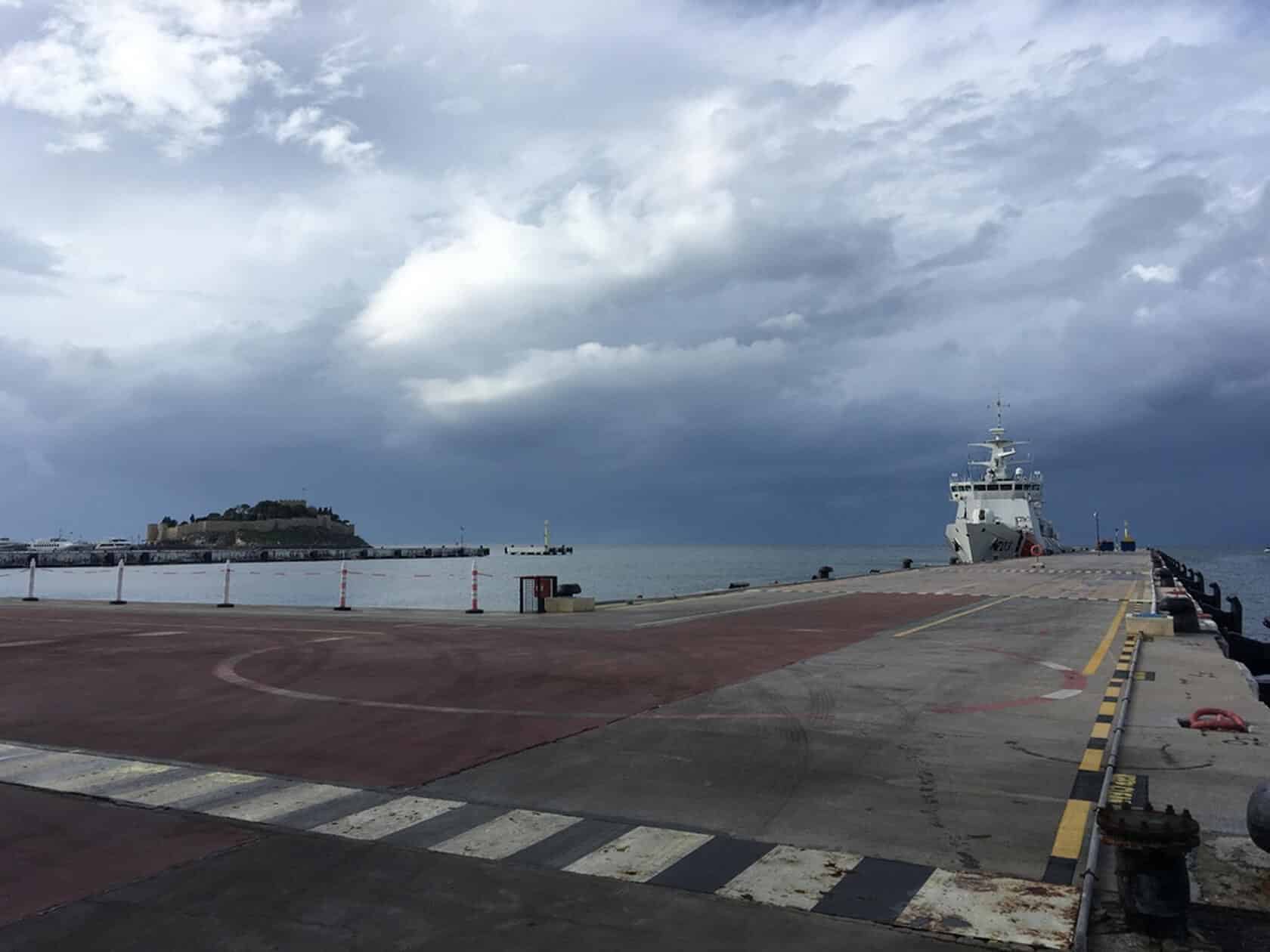
The buses stood along the front in a line with their engines running and their interior lights on, so that from a distance they looked like a row of lit rooms. The drivers waited outside them sipping their çay, talking about the road to the archaeological site of Ephesus, twenty kilometres inland, and about which of them had taken it too slowly the day before. Güvercinada was still only a shape at the end of its causeway.

Then the sky went grey. Then thin and gold at the edge.

Eventually a silhouette appeared from the west with lights on it. The silhouette became a ship, and by the time she was fast alongside, the whole town had woken up around her.

Nobody taught me that quay. I stood on it every morning until it became legible.

I learned there that a driver knows things about a destination no consultancy report has ever contained. That the simitçi and the shoe shiners know the ship calendar because the rhythm of their own day depends on it. That an officer behind a desk can change the course of an operation more completely than the person whose name appears on the contract. And that the twenty minutes before anyone arrives are often the twenty minutes in which the whole day is made.

Nobody ever said any of this to me.

I picked these things up by standing beside people who were busy, in the dark, and who would probably have been surprised to hear that they were teaching anything.

Later, when I became a licensed guide in French and English, I learned another version of the same lesson. Spend six hours beside a passenger and you begin to see things no architect can draw: where people stop, what tires them, which sign they walk straight past, where they look first and what they travelled all that way hoping to feel.

THE PATTERN

Twenty-five years later, I was sitting in a design meeting for an underground cruise terminal when something from those mornings returned without announcing itself.

A coach starts its engine long before a ship berths. Put forty of them inside a closed structure and what appears to be a parking question becomes a ventilation question. That has to be understood at the design stage, because by the time the coaches are there, it is too late.

The knowledge had travelled silently for twenty-five years, from a row of coaches on a quay to an engineering decision, changing form along the way.

The same was true of colour.

Cruise lines carry colours as deliberately as they carry names. Put competing lines into the same terminal and a wall colour is no longer simply decoration. Somebody will read it.

None of this had been on a syllabus.

That is part of the reason I enjoy classrooms now.

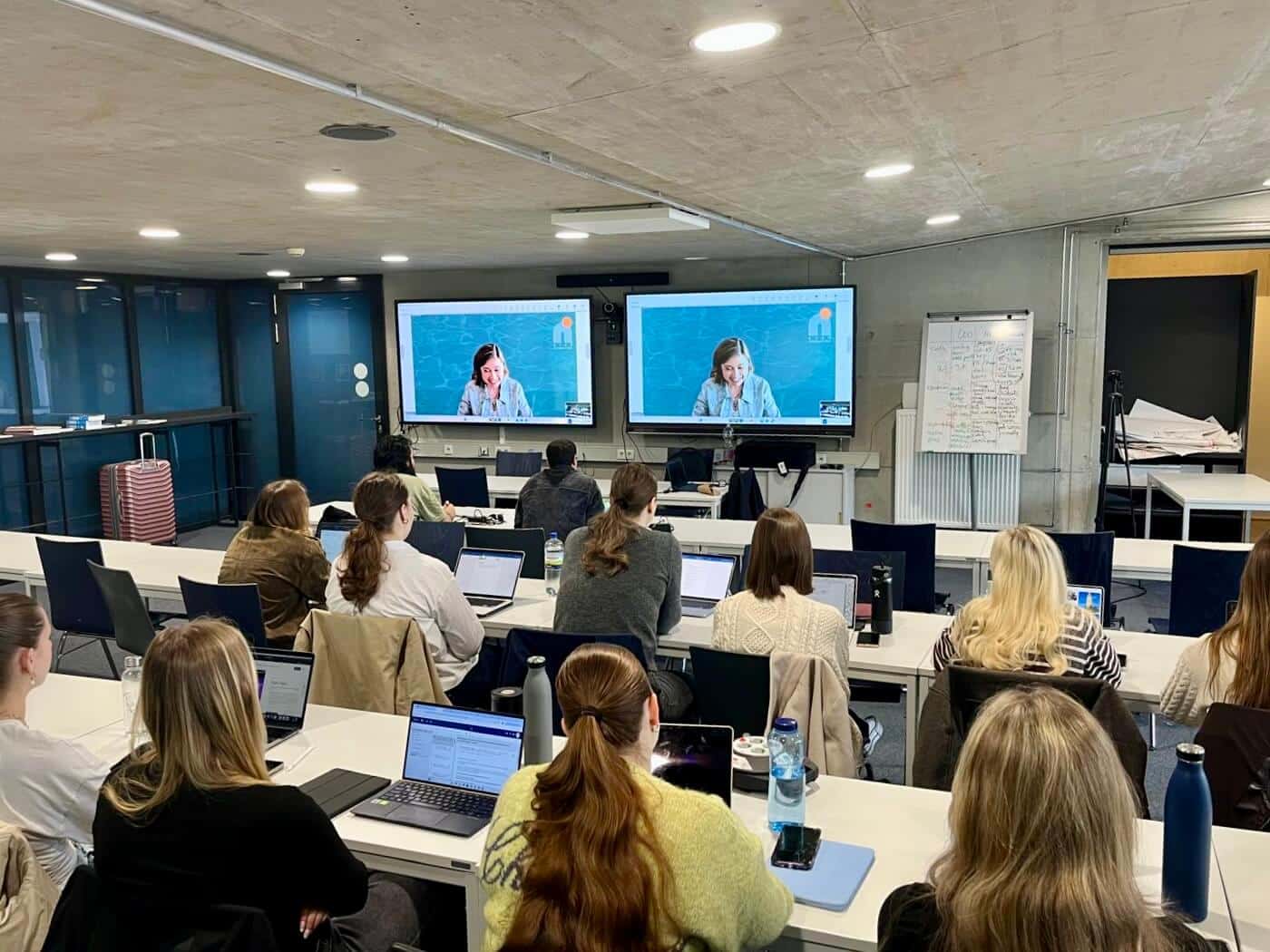
This spring, from my desk in Istanbul, I joined a leadership class at Hochschule Bremerhaven. I had prepared twenty minutes. We stayed together for an hour and a half.

The students asked about preparedness, about the skills their generation would need, about what it had been like to be the only woman in the room. And then one of them asked how you keep walking when your life is breaking.

They asked the questions adults have stopped asking each other.

To that last question I gave the only answer I have found to be reliable. What is important is rarely urgent. You do not run faster. You breathe deeper.

Meanwhile, our industry is worried about talent, and rightly so. We have built academies, certification schemes, university partnerships, internships and increasingly structured routes into responsibility. Much of that work is valuable.

That conversation left me with a suspicion. We sometimes confuse teaching with transferring information.

Young people are not short of information. They can learn the framework, find the regulation, watch the tutorial and ask an algorithm to explain the procedure before breakfast.

What is harder to transfer is the knowledge that never arrived as a lesson in the first place.

The understanding that the person with the smallest title might know more about the operation than everyone around the boardroom table. The instinct to watch where a passenger hesitates rather than where we expected them to go. The curiosity to ask the person doing the work how it should be done, rather than assuming the answer sits on a diploma or higher up the organisation. None of these things requires seniority.

At twenty, I did not know which details would matter thirty years later. I simply paid attention.

And the people I learned from were not trying to teach me. They were driving the coach, opening customs, pouring the tea, walking the quay before dawn, solving whatever needed to be solved before anyone arrived to notice it.

I happened to be close enough to watch.

THE QUESTION

Since Bremerhaven I have thought less about what we should teach the next generation and more about how much of what matters was never formally taught to us.

We tend to imagine learning as something deliberate. A teacher speaks, a student listens, a course is completed, a certificate is issued. Yet much of what we later discover we know arrived differently: through proximity, repetition, observation, and slowing down long enough to watch someone else do the work properly.

A certain technique travelled with me ever since. It was curiosity, and its quiet sister, compassion. Neither was on a syllabus. Both are the engine.

We spend much of our working lives focused on what is in front of us: the meeting, the deadline, the vessel arriving late, the problem that needs solving before anyone notices there was one. We rarely stop to consider who may be watching us while all of this is happening.

Yet someone almost certainly is.

A younger colleague may be learning what leadership looks like from the way we behave when plans unravel. Someone new to the industry may be noticing whose opinion we ask for, whose name we remember, how we speak to the person with the least impressive title in the room, and whether experience has made us more curious or simply more certain.

None of this appears in a training manual. It is where the apprenticeship actually happens.

So who is standing close enough to watch you work, and what are they learning that you did not choose to teach?

Until the first Tuesday in October.

Figen

In bocca al lupo, in mare aperto.
Designing systems where everyone wins, including our seas.
September 1, 2026

What nobody taught me at twenty

Task

A monthly letter from Figen Ayan

  • Issue

    The Apprenticeship Issue

Back

This website stores cookies on your computer. Cookie Policy