Ayan ConsultingMeydan Grandstant, 6th Floor,
Meydan Road, Nad Al Sheba, Dubai, UAE
info@ayanconsulting.com
+90 (212) 924-2410

Soundings

A monthly letter from Figen Ayan
FIGEN AYAN

What luxury has quietly become​

#1 THE LAUNCH ISSUE
2 JUNE 2026

6-MIN READ

Dear reader,

Welcome to Soundings. If you have come from my desk, my LinkedIn, the Galataport years, or from a panel where we shared a table without speaking, thank you for being here. This letter will arrive on the first Tuesday of every month. One sitting. One coffee. The length of the time it takes a harbour to wake.

Issue 01 should perhaps have been about ports and destination development. It is what I have built my career around. But the question that has stayed with me through the spring is not about ports. It is about luxury. Specifically, about what luxury has quietly become while no one was looking.

THE SIGHTING

The vessel I mentioned is Four Seasons I.

I had spent two years following her. Not from the inside. I am Four Seasons’ strategic advisor in Türkiye, not a member of the crew or the build team, but from every angle I could reach: every news item, every social post, every render and linen sample and deck layout I could find published. I had been around enough yachts to be unimpressed by yachts. 

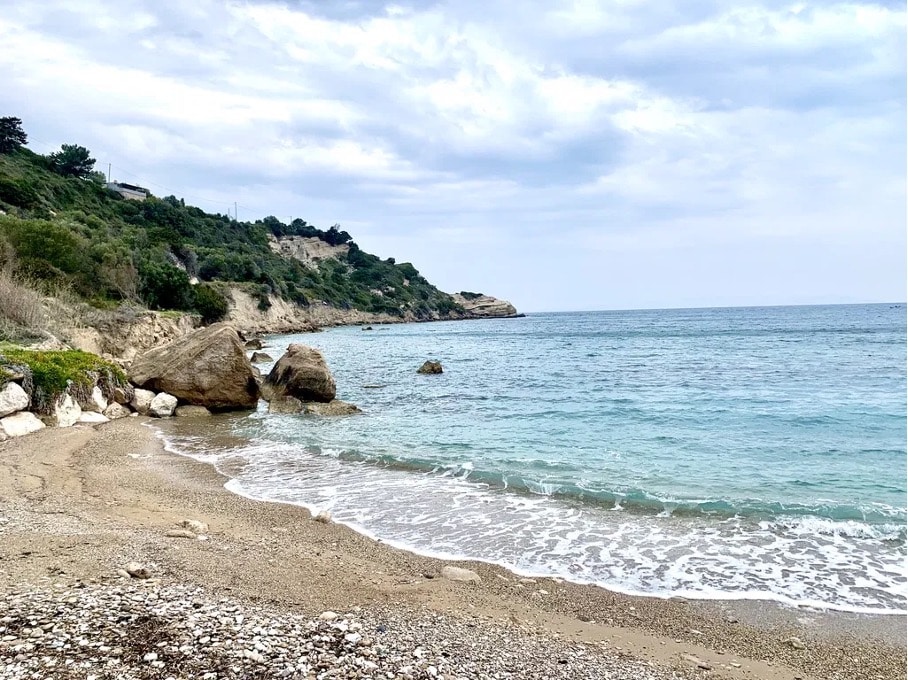
And then, in May, I watched her settle into a small bay on the Turkish coast. Not Bodrum, not Kuşadası. A bay no concierge in New York or a glossy travel magazine would recognise the name of. The kind of place where the captain is the one who waves to the shepherd, and the shepherd waves back.

She did not dock. She did not perform an arrival. She simply, slowly, came to rest. The way a thought settles into a paragraph when you have finally written it well. There was no crowd at the railing taking video, because there was no one to take video for. The guests had already disembarked, by tender, half an hour earlier, to walk the path above the bay before the heat.

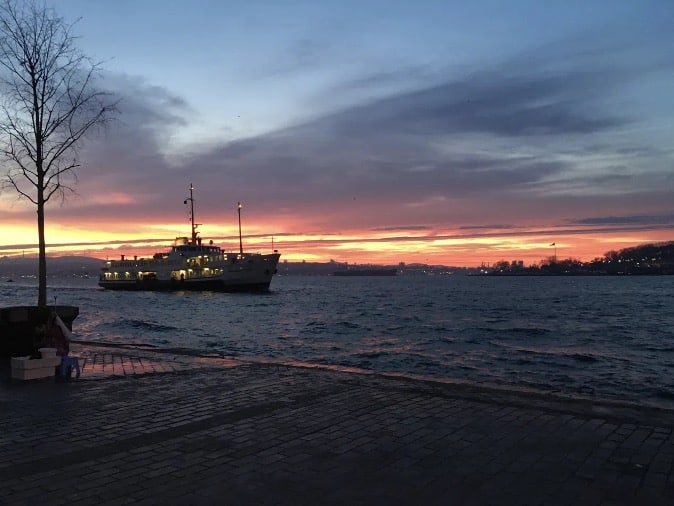
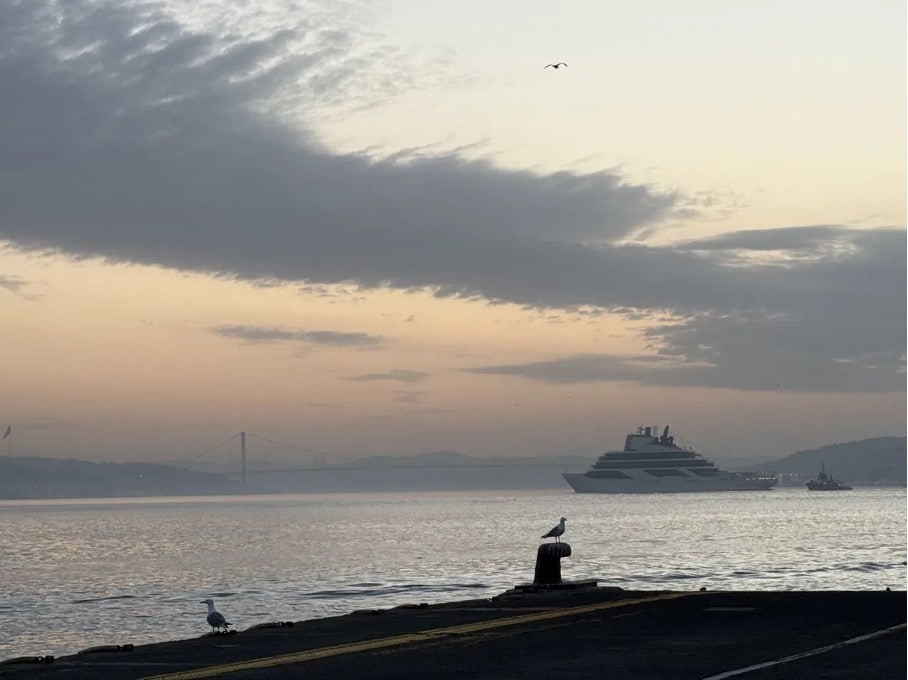
I had watched her arrive once before, and I have told the story so many times since that I have stopped trying to explain it cleanly. It was Istanbul. I cannot tell you whether it was the shape of her, or the light on her hull, or the colour, but as she came up toward the port, she did not announce herself against the skyline the way ships do. She melted into it. She did not clash. She approached the pier slowly, elegantly, smoothly, and even the team waiting for her on the pier for her first call could not quite “see” her. We could not see Four Seasons I against the city, because she had already become part of it. She berthed gracefully. In thirty years I have never seen a vessel make itself one with the skyline of a port city like that, never felt a ship dissolve into a place rather than impose on it. Two days later, when I shared it with James Cabello and the Four Seasons Yachts team in Miami, what I noticed resonated miles away, with them. I think they understood before I did that the not noticing was the point.

I stood on a hillside and watched, and I had a thought I have not been able to put down since.

This is not what luxury used to look like.

THE PATTERN

For most of the modern industry’s history, luxury was display. A larger vessel.

A grander suite. A more visible logo. A higher crew ratio. A pool with more lights, a buffet with more silver, a destination with more recognition. The job of luxury was to be obvious about itself. The premium was the announcement.

Somewhere in the past five years, that contract broke. Not all at once. Not loudly. The way a tide changes direction.

If you were looking in the right places, the Aman properties, the quietest tables at La Cour Jardin of the Plaza Athénée, the new generation of expedition vessels, Club 55 on Pampelonne Bay at Saint-Tropez, where luxury still gathers without ever raising its voice, the rise of the hotel that does not display its name on the façade, you saw it shift.

Luxury became absence.

Absence of noise. Absence of crowds. Absence of obvious effort. Absence of the brand. Absence of friction so complete that the experience becomes invisible, and the guest is left with only the place, the meal, the conversation, the care, the silence. The new luxury is what you do not notice. The terminal that does not slow you down. The crew member who reads the room before the room speaks. The cabin that anticipates the season. The itinerary that reads the emotions.

I have written about this from many angles over the past year. From the design of Galataport’s underground terminal, which we built precisely so that the city above could remain itself. From the partnership with Ocean Ecostructures, where the most important work happens out of sight, beneath every piling. From the quiet rooms at Cannes and the loudest rooms at Seatrade, both of which taught me the same lesson at different volumes.

The pattern is consistent. The terminals, the brands, the experiences that do their job perfectly are the ones you do not notice. Their excellence is measured in what does not happen. The delay that did not occur. The disappointment that did not arrive. The moment of friction the architect designed out before the guest knew it existed.

This is a profound shift. It changes the definition of value. It changes the metrics. It changes who wins and who loses in the next decade of cruise, hospitality, and destination design. The orderbook tells you the industry knows this is coming. Almost forty percent of new tonnage is now luxury or expedition. The shipyards know. The owners know. The hotel owners know. Most of the conversation has not caught up.

THE QUESTION

But here is the line I keep turning over.

If real luxury is the absence of friction, what is the price of designing for absence?

It is not free. Every disappearance has a cost. The terminal that vanishes beneath the city is the most expensive port project in the Mediterranean. The crew member who reads the room is the one with the longest training. The itinerary that knows what to leave out is curated by someone who has spent decades learning what to put in. The crisis you never heard about is the one someone worked through the night to prevent.

Absence is not the absence of work. It is work that has decided not to take credit.

And there is a cost that is harder to see than any of these, because it sits not on the ship but on the shore. A vessel can be designed for silence in a shipyard. A port cannot.

In an industry that increasingly rewards what cannot be seen, who gets paid for what does not happen? Who tells the story of the disaster that did not occur, the wave that did not break, the guest who did not complain because the friction was removed before they noticed it? And who, exactly, is preparing the shore, the ports and the destinations on whom this whole quiet promise finally rests? Who funds the readiness that has to be in place, on every level, before the first ship ever melts into the skyline? 

I do not have a clean answer. Soundings is the place where I will keep working on it, and where I hope you will work on it with me.

Until the first Tuesday in July.


Figen

Sevgilerimle.
June 1, 2026

What luxury has quietly become

Task

A monthly letter from Figen Ayan

  • caption

    value

  • Issue

    The Launch Issue

Back

This website stores cookies on your computer. Cookie Policy