


Soundings
The rhythm our body remembers
A letter about rhythm, resource, and the limits of performing.
Dear reader,
Welcome back to Soundings.
THE SIGHTING
Some years ago, in a July in Colorado, I disconnected completely from my Istanbul life. After a week of meditation and quantum teaching, something happened that I can still remember physically.
The sun suddenly seemed brighter. I noticed the graceful movement of the trees as their branches followed the summer breeze. The grass beneath my feet produced so many different sensations that, almost without thinking, I lay down so that my whole body could feel them. For a while, I simply surrendered.
Time and space seemed to disappear. I could hear an extraordinary harmony in the nature surrounding me and felt completely held within it. Even the people around me no longer seemed quite separate. There was a coherence to everything that I find difficult to describe now without diminishing it.
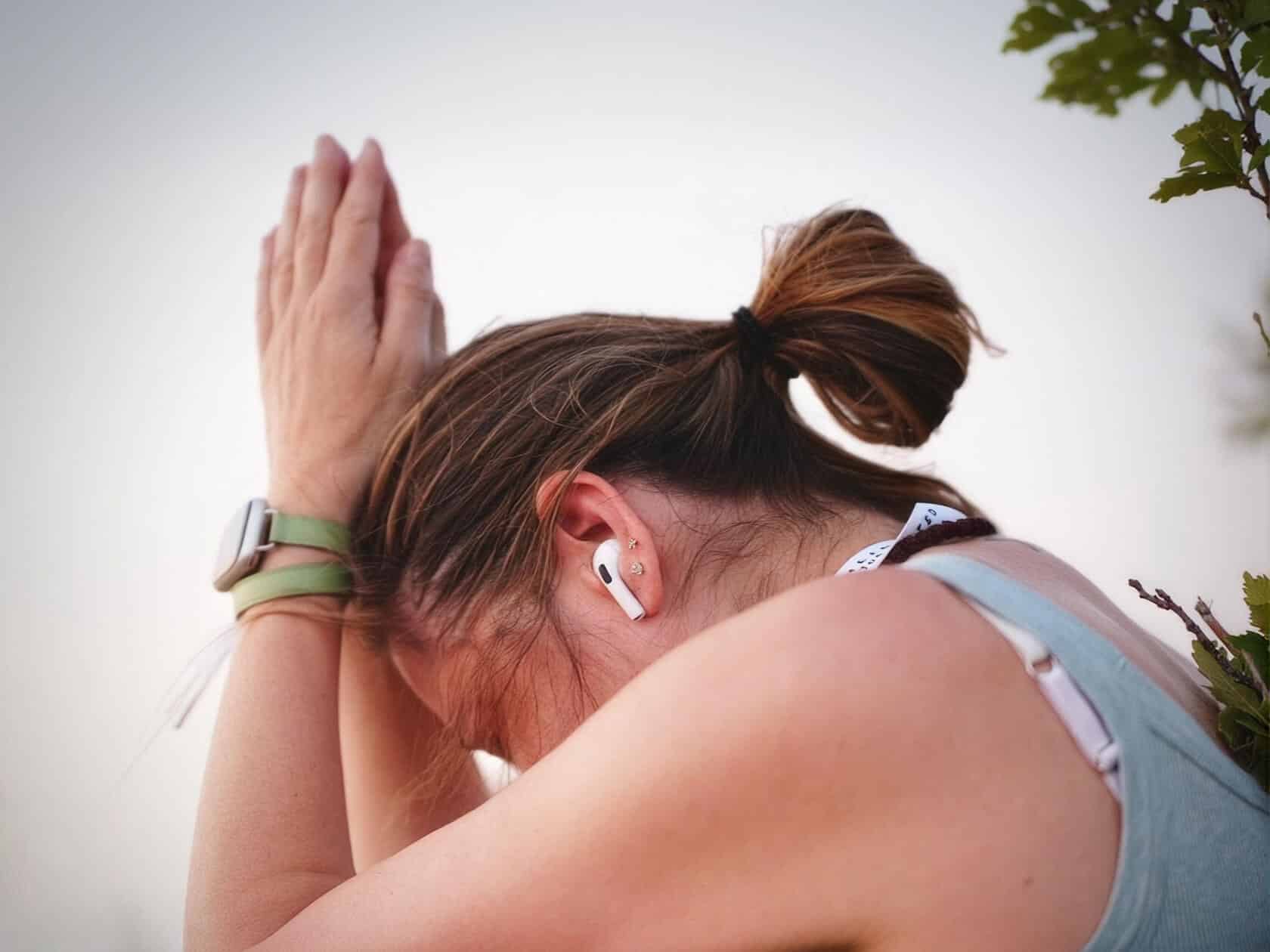
At some point, someone must have noticed the state I was in and taken this photograph.
Years later, another detail in the image catches me.
My hands are raised. My head is bowed. My body has found a gesture far older than anything I consciously intended.
And there is an AirPod in my ear.
An Apple Watch on my wrist.
I love the coexistence of those things. I have never rejected contemporary life. I have not escaped from it, quite the opposite. Something ancient and something entirely modern simply occupied the same body.
The photograph froze that moment.
THE PATTERN
For most of my working life, I have been very good at speed. Ports teach you that. Six ports, three countries, over thirty years of it. Ships sail. Thousands of people move. Friction has consequences. Decisions that appear anodyne can alter what happens to thousands of people, and the next one rarely waits politely for the previous one to be resolved. I function well in that world and I recognise myself in it.
And yet, throughout those same years, another rhythm has kept finding its way into my life. I have gone away for it. Sat in silence. Learned to breathe differently. Walked for hours. Followed disciplines I did not invent and encountered ancient rituals that made deep sense somatically, as though my body recognised something before my mind did.
Sometimes I crossed continents. Sometimes I barely crossed the city. For years, I thought I was leaving my life for a while.
Long before we had calendars crowded with meetings, notifications measuring our attention and watches measuring our bodies, human beings had already understood something about rhythm. Across cultures and traditions, interruption was built into life.
There were days when work ceased. Prayer had its hours. Bells marked time. Fasting interrupted abundance. Pilgrimage removed people from the familiar. Meditation brought attention back to breath. Rituals repeated, carrying gestures and practices from one generation into the next. Agriculture followed seasons because it had no choice. Communities organised themselves around light, weather, harvest and rest. The practices differed enormously. The underlying recognition is harder to miss.
Nature still operates that way. Tides come in and go out. Seasons advance and retreat. Fields produce and lie fallow. Darkness follows light. The heart contracts and releases. Breathing itself depends upon our ability to do both.
Continuous acceleration is strangely absent from the natural world. Yet we have become exceptionally good at asking it of ourselves.
We fill waiting. A walk can carry a telephone call. A journey becomes an opportunity to answer messages. Sunday prepares Monday. Even rest has become something to optimise.
We measure sleep, count steps, monitor breathing, schedule recovery and ask whether all of it will make us perform better tomorrow. We are hardly outside this world.
That is why I went back to the meaning of the word resource and realized that we use it constantly. Natural resources. Human resources. Resource management. Resource depletion.
There is something curious in putting human and natural into separate categories. As though one did not belong entirely within the other. We understand that a forest cannot be endlessly cut, an aquifer endlessly drawn from, a field endlessly harvested, an ocean endlessly asked to absorb what we put into it. At some point, extraction changes the system itself.
Yet when the resource is human, exhaustion is treated differently. We admire availability, endurance, responsiveness, and the ability to absorb more and continue.
I know how easily I fall into it myself. When life feels as though it is slipping through our fingers, our instinct is to fill the diary, make the decision, take the flight, start the next thing, sometimes reaching for the next experience before the present one has quite finished. Movement can feel remarkably like being alive. I know that instinct intimately.
And still, some of our clearest thinking has come when, from the outside, very little seemed to be happening. Problems, which had been carrying for weeks become clearer. An idea would arrive unexpectedly. Other things simply stopped feeling as important. This is where resource acquires another meaning for me.
Re-source.
To return to source.
THE QUESTION
Time complicates the idea of return. The person who returns is no longer precisely the person who left. The body changes. The places change. The world around both changes.
Nature accommodates change constantly. It regenerates, adapts, retreats and renews, always within limits.
We understand those limits when we speak about forests, oceans, water, energy and climate. We may fail to respect them, but we know they exist.
I am less certain that we recognise the same principle in ourselves.
We have always been drawn to what appears without end. We have built extraordinary systems around the possibility of doing more.
We ask the planet to regenerate while asking ourselves to continue. The distinction feels increasingly strange to me.
We are not standing outside nature looking at it. We belong to the same finite system.
Until the first Tuesday in November.
Figen
THE PAIRING
Pure Light, Kiních 7 with CamelVIP.
From this issue on, each letter arrives with one piece of music that was somewhere near me while it took shape. There is no method to it.
·
Designing systems where everyone wins, including our seas.
The rhythm our body remembers
A monthly letter from Figen Ayan
-
Issue
The Resource Issue